Blog > Your Yard Isn't Dead. It's Waiting.
What Orange Tree, Bay Hill, Dr. Phillips, and Windermere homeowners need to know about recovering their landscapes after a freeze — and why patience is the most powerful tool you have.
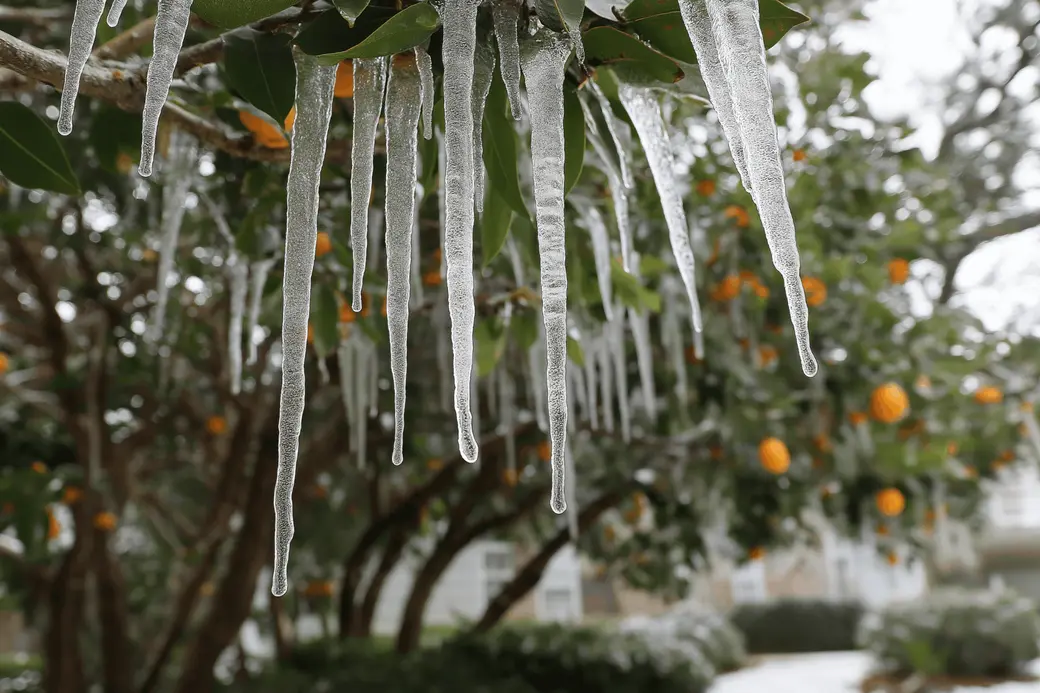
Walk through any established neighborhood in Orlando right now — Orange Tree, Bay Hill, Dr. Phillips, Windermere — and the picture is the same. Hibiscus drooping. Ixora limp and brown. Bougainvillea looking like it's already given up. After a stretch of cold nights that broke records across Central Florida, it's tempting to assume the damage is done.
It probably isn't. For most of the plants common in these neighborhoods, what looks like devastation is actually something much simpler: stress. The plants are alive underground, conserving energy, and waiting for the signal to come back. Your job right now isn't to fix anything. It's to stay out of the way — and do a few quiet things to help.
Put the Pruners Down
This is the single biggest mistake homeowners make after a freeze, and it's an understandable one. Brown, wilted growth looks awful. The instinct is to clean it up immediately.
Don't. Those dead-looking leaves are doing a job — they're insulating the living tissue underneath from any cold that's still coming. And in Central Florida, another frost in late January or February isn't unusual; it's expected.
The better approach: wait until you can clearly see new green growth emerging, then prune back only to healthy tissue. In the Orlando area, that generally means holding off until late February at the earliest. When you do trim, scratch the bark on a stem with your fingernail. Green underneath means it's alive. Brown means it's gone — cut it back to where the green starts.
Water Smarter, Not More
Cold weather dries plants out in ways most people don't expect. Even in the 40s and 50s, roots are still working — still pulling moisture, still preparing for the recovery ahead. The mistake here isn't forgetting to water. It's watering the wrong way.
Water deeply but infrequently. Aim for the root zone, not the foliage — wet leaves in cold weather invite disease. And resist the urge to keep the soil soaked. Moist is the goal. Soggy is a problem.
In neighborhoods with mature, layered landscaping like Bay Hill or Windermere, root systems are already competing for moisture beneath the surface. Consistent, targeted watering now makes a real difference in how fast things come back — even before you see a single new leaf.
Mulch Is Doing the Heavy Lifting
If your mulch washed thin during recent rains — or hasn't been refreshed in a while — now is one of the best times to fix it. A fresh two- to three-inch layer does three things at once: it stabilizes soil temperature, locks in moisture, and keeps lingering cold from reaching the roots that matter most.
One detail most people skip: keep the mulch a few inches away from trunks and stems. Piling it against the base traps moisture right where you don't want it and can invite rot over time.
The Plants Most Likely to Bounce Back
Here's the encouraging part. Many of the plants that look worst right now are the ones with the strongest track record of recovery. In established Orlando neighborhoods — where these plants have had years or decades to build deep root systems — the odds are genuinely good.
Hibiscus, bougainvillea, ixora, plumbago, pentas, ti plants, mature palms, and citrus trees are all remarkably resilient once established. The pattern is consistent: the older the plant, the deeper the roots, the better its chances. This is especially true in long-established communities like Orange Tree and Dr. Phillips, where mature landscaping has had time to become genuinely resilient.
Hold Off on Fertilizer
This one catches a lot of people off guard. The instinct after a freeze is to help plants recover quickly — and fertilizer feels like the right move. It isn't. Not yet.
Fertilizing too early pushes tender new growth exactly when another cold night could damage it. Wait until daytime temperatures are consistently warm and you're already seeing new shoots before feeding your plants. Patience here protects the recovery you've already started.
Don't Write Off Your Lawn
If your St. Augustine or Zoysia has gone straw-colored, that's dormancy — not death. The grass is conserving energy and will come back on its own as temperatures warm. The best thing you can do is limit foot traffic across it and water lightly if the soil gets dry. Leave it alone, and it will wake up.
Why This Matters Beyond the Garden
In neighborhoods where curb appeal is part of the equation — especially for homes on the market or in higher-end areas of Orlando — how you handle the weeks after a freeze can have a real impact. Over-pruning, over-fertilizing, or replacing plants too quickly doesn't just waste money. It can set back a landscape that was already on its way back.
Whether you're maintaining a home you plan to keep for decades or quietly preparing for a future sale, letting mature landscaping recover naturally almost always produces the best result. Spring in Orlando has a habit of making the patient gardener look like a genius.
Florida landscapes are tougher than they look. What seems lost in January often comes back by April — fuller, greener, and stronger than before.